

Status Classification: Exempt vs. Nonexempt - How to Find and Fix Misclassification Mistakes
Learn to classify employees as exempt or nonexempt under federal and state law, apply each exemption test, and find and fix misclassification before it leads to claims.
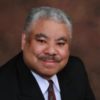 Speaker
Melvin K. Patterson
Employment attorney · Cedrus Group · 20+ years as trial litigator
Overview
Employee misclassification has been a focus for the IRS and the Department of Labor for years. Each year, class action lawsuits seek millions in unpaid overtime from employers who wrongly treated workers as exempt.
This 90-minute exempt vs nonexempt webinar explains the classification rules under federal and state law and how to avoid the misclassification trap. It covers FLSA guidelines for hourly workers, how to decide who in your workforce is exempt, and how to structure jobs so classifications are clear.
You'll work through each exemption test, executive, administrative, professional, computer employee, outside sales and highly compensated, plus exemptions for education staff, state vs federal salary basis rules, and the changes that would have taken effect under the FLSA Final Rule on Overtime.
Why attend: Misclassifying an employee or group of employees can mean back pay and benefits plus substantial penalties. Knowing the limits of each worker category under state and federal rules is the best protection. This session suits CFOs, C-level executives, HR and accounting professionals, payroll and operations leads, department managers, store directors, schedulers and staffing associates.
What’s covered
- FLSA guidelines for classifying hourly workers
- State and federal definitions of exempt and nonexempt
- Executive exemption: meeting the test
- Administrative exemption: management or general business operations, discretion and independent judgment
- Exempt employees of educational establishments
- Professional exemption: learned and creative professionals
- Computer employees: what makes some exempt
- Outside sales employees: the requirements
- Highly compensated employees: meeting the test
- State vs. federal salary basis requirements
- Structuring jobs to avoid classification confusion
- Consequences of misclassification
- Changes that would have taken effect under the Final Rule on Overtime
Who should attend
What you get
About the speaker
Melvin K. Patterson, an attorney licensed to practice before all state and federal courts in California, is General Counsel to the Cedrus Group, a family of international financial services firms with offices around the globe. He is a member of the Labor & Employment Section of the California State Bar and has been admitted to the United States District Court for the Northern District of California as well as the United States Ninth Circuit Court of Appeal. Mr. Patterson is experienced in Labor and Employment litigation and transactional matters in the U.S., Asia and the U.K. He has designed internal business policies, procedures and management structures, as well as inter-corporate relationships and has been a business owner himself. Mr. Patterson is an experienced trial litigator who has handled numerous business and commercial matters for over 20 years on behalf of an elite clientele around the world. He has defended clients in matters brought against companies by employees, commercial business agreements and government regulatory matters. Mr. Patterson holds a Doctor of Jurisprudence degree from the John F. Kennedy University School of Law, as well as a Certificate in Strategic Human Resource Management from Cornell University. He has also earned the American Jurisprudence Award, completed specialized training in Assessing Economic Damages, Forensic Discovery and Preservation of Electronic Evidence and Data. Mr. Patterson was nominated to the National Dean's List and has been a speaker before such groups as the Asian Pacific American Law Students Association, is a past contributing editor to California Motions In Limine (The Rutter Group) and has been a columnist for the "The Docket", the news and information journal of the San Mateo County Bar Ass'n. He has a knowledge of Korean, Japanese and Spanish languages.
More in HR Compliance
See all 352 HR webinars → Margie Faulk · 90 min
Secrets Of Psychology - Why People Do The Things They Do
 Paul J. Cline · 90 min
Project Management For Administrative Professionals
 Chris DeVany · 90 min
Elevate Your Workplace Wellness: 10 Critical Wellness Factors